


Hindmarsh Island History and Ngarrindjeri Dreamtime Stories

Updated: Oct 27
Hindmarsh Island looks quiet at first glance: low reeds, wide water, bird calls, river light. Yet this small island near the mouth of the Murray holds layers of history that reach far beyond its shorelines.
Known to many Ngarrindjeri people as Kumarangk, Hindmarsh Island sits where fresh water, salt water, trade routes, farming, tourism, politics and sacred story meet. Its past cannot be told only through dates and buildings. It also belongs to the older knowledge of the river, the Coorong, the lakes, and the Ngarrindjeri Dreamtime stories, more commonly connected in public sources with Ngarrindjeri Dreaming traditions.

Kumarangk before European settlement
Long before it appeared on colonial maps as Hindmarsh Island, Kumarangk formed part of Ngarrindjeri Country. The Ngarrindjeri Nation is made up of groups connected across the lower Murray River, Lakes Alexandrina and Albert, the Coorong, and the southern coast of South Australia.
This region is sometimes described through the idea of Ruwe, a Ngarrindjeri word often translated as land, waters, body, spirit and all living things together. That idea matters because it changes how history is understood. Kumarangk was not just a place to live on. It was part of a living system of relationships.
The waters around the island supplied fish, shellfish, waterbirds, reeds, plant foods and travel routes. Canoes moved through channels and along the river. Seasonal knowledge guided when to fish, gather, move, camp and care for places. Middens, stone artefacts and cultural sites across the wider lower Murray region show long and continuing occupation.
The island’s location made it especially significant. It sits near Goolwa, the final stretch of the Murray River before the Murray Mouth. This is where Australia’s longest river meets the Southern Ocean through a shifting, powerful, and fragile estuarine system. In Ngarrindjeri understanding, these waters are alive with story and responsibility.
Dreaming stories are not simply old tales. They carry law, teaching, geography and identity. They explain how places came to be, but they also show how people should behave towards Country and each other. Some knowledge is public. Some belongs only to certain people, families or ceremonial contexts. Any account of Kumarangk should respect those boundaries.
The Dreaming stories of Ngurunderi and the lower Murray
One of the best-known public Ngarrindjeri Dreaming figures is Ngurunderi, an ancestral being whose journeys are associated with the shaping of the lower Murray, the lakes, the Coorong and nearby coastal places.
Public versions of the Ngurunderi story vary in detail, as oral traditions often do. They are living stories, not fixed textbook entries. In broad public tellings, Ngurunderi travelled through the river country, pursuing a great Murray cod. As he moved, the river, lakes and landforms took shape. His actions marked places across Country, linking geography with moral and spiritual meaning.
Around the lower Murray, the story connects water channels, islands, fish, winds, camps and coastal features into one cultural map. That is why Dreaming stories cannot be separated from place. A bend in the river is not only a bend. A stretch of water is not only a resource. It may carry memory, law and ancestral presence.
Kumarangk, as part of this Country, sits within that broader story world.
The word Dreamtime is widely used in English, but many Aboriginal people prefer Dreaming because it points to something present and ongoing. Dreaming is not locked in the distant past. It continues through ceremony, care for Country, kinship, language, teaching and everyday responsibility.
For readers learning about Hindmarsh Island history and Ngarrindjeri Dreamtime Stories, this is the key point: the island’s meaning did not begin with European naming, farming or development. Those later events sit on top of a far older and continuing cultural foundation.

European naming and colonial change
The island was named Hindmarsh Island after Governor John Hindmarsh, the first governor of South Australia. European settlement brought deep change to the lower Murray region during the 19th century.
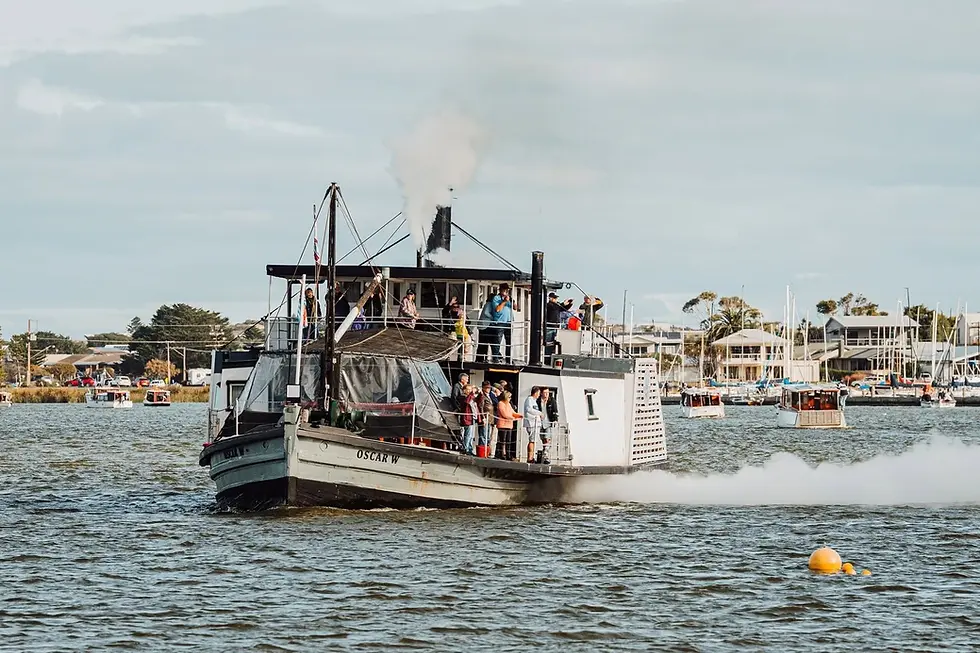
The river became a transport route. Goolwa, just across the water, grew as a river port. Paddle steamers, wharves and trade linked the Murray system to colonial markets. Nearby Port Elliot and Victor Harbor also formed part of the colonial transport story, though the coast proved difficult and dangerous for shipping.
For Ngarrindjeri people, colonisation brought dispossession, disease, mission control, loss of access to places, and disruption of cultural practice. These impacts were not side issues. They sit at the centre of the island’s modern history.
On Hindmarsh Island itself, European land use focused on grazing, dairying and farming. The low-lying land suited some forms of agriculture, though it always depended on water, drainage and the health of the surrounding river system. Over time, shacks, holiday homes and boating culture also became part of the island’s identity.
The construction of barrages near the Murray Mouth in the 20th century changed local waters in major ways. The barrages were built to manage salinity and keep seawater out of the lower lakes. They altered the natural meeting of fresh and salt water, affecting fish movement, wetlands and the wider ecology of the Coorong and Murray Mouth.
For many residents and visitors, Hindmarsh Island became known as a peaceful holiday area. For Ngarrindjeri people, it remained Kumarangk, a place with story, old sites, ancestors and obligations.
Both histories exist, but they do not carry equal weight. One began with occupation and naming by outsiders. The other reaches back through many thousands of years of connection.
The bridge controversy and cultural heritage
No modern history of Hindmarsh Island can avoid the bridge controversy of the 1990s.
For many years, the island was reached by ferry from Goolwa. Plans for a bridge became a major public issue when Ngarrindjeri women raised cultural concerns connected with Kumarangk. The dispute became widely known through the phrase “secret women’s business”, a term that entered national debate and was often used without care.
The controversy involved heritage law, politics, media pressure, court processes, government decisions and strong public disagreement. It also exposed how poorly many non-Indigenous institutions understood restricted cultural knowledge. Some people demanded proof in forms that did not fit the way sacred knowledge is held. Others treated the issue as a test of development rights rather than a question of respect.
The bridge was eventually built and opened, linking Goolwa and Hindmarsh Island by road.
The public record around the controversy is complex. Later legal and public discussions did not erase the harm caused to Ngarrindjeri women and communities during the debate. Many Ngarrindjeri people continue to describe Kumarangk as culturally significant and maintain that women’s cultural knowledge deserved respect.
This episode remains one of Australia’s most discussed cultural heritage conflicts. It raised questions that still matter:
Who decides what counts as evidence?
How should restricted cultural knowledge be protected?
Can development planning properly account for Aboriginal law and story?
What happens when sacred knowledge becomes the subject of public argument?
The Hindmarsh Island bridge is more than a piece of road infrastructure. It marks a point where different legal, cultural and political systems collided.

Ecology, memory and the living island today
Today, Hindmarsh Island is home to a mix of permanent residents, holiday houses, marinas, farmland and wetlands. It is also part of a river system under pressure.
The lower Murray has faced drought, reduced flows, salinity problems and ecological stress. The health of the Murray Mouth and Coorong depends on water management far upstream, not only on local conditions. When river flows fall, the mouth can close or need dredging. Wetlands dry. Birdlife and fish breeding patterns suffer.
That environmental story connects strongly with Ngarrindjeri cultural values. Caring for water is not only a scientific or economic issue. It is also a cultural responsibility.
Ngarrindjeri leaders have long spoken about the health of the river, lakes and Coorong as tied to the health of the people. This view challenges the habit of separating “nature” from “culture”. On Kumarangk, those things belong together.
For visitors, that means the island asks for more than sightseeing. A respectful visit includes awareness of the deeper Country beneath the roads, marinas and holiday parks. It means staying on marked tracks, protecting wetlands, taking rubbish away, respecting signs, and treating Aboriginal cultural heritage as living heritage.
It also means using the right language when possible. Kumarangk is not just an alternative name. It is a reminder that the island already had names, stories and laws before colonial naming.
How to approach Ngarrindjeri Dreamtime stories with respect
Learning about Dreaming stories requires care. Public stories can be shared for education, but not all knowledge is open to everyone. Some details may be restricted by gender, age, family responsibility or ceremonial role.
A respectful approach includes a few simple habits.
Use public sources carefully. Prefer material shared by Ngarrindjeri organisations, cultural centres, Elders, museums or educational programs that have permission to tell those stories.
Avoid treating Dreaming stories as myths in the casual sense. In Western usage, “myth” can imply something false. For Aboriginal cultures, Dreaming stories carry truth, law and guidance.
Do not copy sacred designs or stories for decoration. Cultural material is not free stock content. Permission matters.
Listen for place-based meaning. A Dreaming story may explain a river channel, a fish species, a wind, a hill or an island. These details teach how Country works and how people belong to it.
Accept that not every question gets an answer. Some knowledge is not meant for public explanation. Respecting that limit is part of learning.
This matters because Hindmarsh Island’s story has already suffered from people demanding access to knowledge that was not theirs to judge or expose.

Why Hindmarsh Island still matters
Hindmarsh Island is small, but its history reaches into some of Australia’s biggest questions.
It asks how a nation remembers places with more than one history. It shows how colonial maps renamed Country without replacing older knowledge. It reveals the damage caused when sacred culture must defend itself in public forums built around Western proof. It also shows the strength of Ngarrindjeri people, who continue to speak for Country, culture and water.
For non-Indigenous Australians, Kumarangk offers a clear lesson. History is not only what settlers wrote down. It also lives in language, water, story, law, ceremony and care.
To understand Hindmarsh Island properly, start with the river. Then look beyond the bridge. Listen for the older name, Kumarangk. Learn what can be shared about Ngurunderi and the Dreaming. Respect what cannot be shared. The island’s past is not finished, because its cultural life continues wherever Ngarrindjeri people care for Country and keep story alive.


Comments